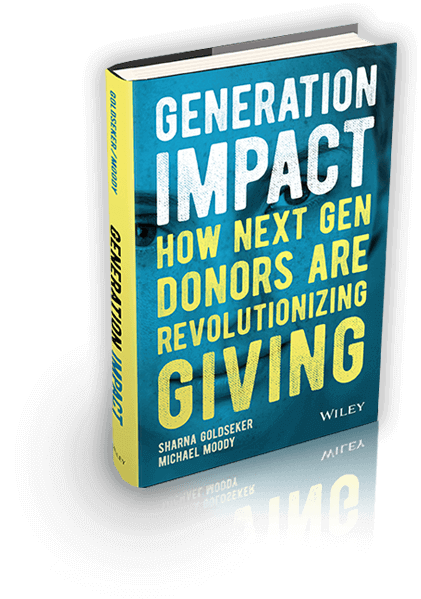
Next gen donors have always been at the center of our work. JH Philanthropy was built around our founder's experience with them - wealth creators and inheritors who were defining their own philanthropic identities, often alongside or in response to what their families had built before them. We know this group well. And now, we are working with a new wave: their children. That is what made this spring’s team read feel especially timely. Our book was Generation Impact: How Next Gen Donors are Revolutionizing Giving by Sharna Goldseker and Michael Moody (originally published in 2017, with an update in 2021). The book digs into the why's, how's, and what's of philanthropy as it is being practiced by the rising generation of donors.
Many of you are living in this moment, or you know it’s coming. Children and grandchildren are asking questions, stepping into foundation roles, and beginning to form their own relationship with the family’s philanthropy. We were eager to dive in: what would ring true, what could we learn, and what would it surface for the families we work with?

Before the next generation can carry a legacy forward, they need to know why it was built in the first place.
What Goldseker and Moody describe is a generation building on family legacies while clearly defining their own. Many of these donors grew up watching their grandparents and parents enact philanthropy, and they are now bringing new giving priorities and new kinds of charitable partnerships to the work. They are determined to be more than a "checkbook." They want to spend time on boards, in volunteer roles, or as leaders inside the family foundation. They are open to risk but deeply focused on impact. They are ready to be curious, brave, and keep moving real dollars into communities.
Two themes from our discussion will shape how I work with next gen donors going forward.
1. The “Why” Has to Come First
The book is full of personal stories from current next gen donors. One that stayed with me came from Alexander Soros: "If asked by other next gen donors what to fund or how to fund… I would ask: 'What are your personal stories? What are the things you want to change? What is the reason?'"
At JH Philanthropy, we call this the Ultimate Purpose. It is a statement that articulates why a foundation exists, or what a donor (or group of donors) is ultimately trying to make possible over time. It clarifies why a family does philanthropy together and helps them stay focused and productive.
For next gen donors looking to make their own mark, starting with their "why" gives them somewhere solid to stand. It lets them build on what their family has done, make decisions rooted in today's realities, and trust that their intent and their future impact will be aligned.
2. Asking Hard Questions Early Is Actually an Act of Respect
Our discussion group included former nonprofit professionals, current development leaders, and philanthropic advisors, so the conversation about "impact" came up quickly. We talked at length about what that word means across our different vantage points.
Nonprofit teams are already stretched. Add federal and state funding cuts, plus recent efforts to discredit the sector, and the prospect of a new donor arriving with detailed questions about impact, measurement, and outcomes can be exceptionally daunting.
JH Philanthropy practices and encourages ‘nonprofit-centered philanthropy’. We put trust in the nonprofits we work with and respect their time well before they ever become grant recipients. But what I have come to see, both in our client work and in the book, is that next gen donors are asking those deeper questions at the start of their discovery phase for a reason. They want to make grantmaking decisions quickly and confidently, and they want those decisions to support longer-term funding aligned with the greatest needs of the nonprofits they choose. The extra work up front often becomes the foundation for trusted, multi-year partnerships, with fewer lengthy applications and less burden from annual reporting later on. We all felt this is a tradeoff most nonprofits would welcome.
Why this book stays on my desk
I have now recommended this book to two clients, and my own copy is still within arm's reach. It serves as a reminder of what is possible when families approach this moment with intention, and a resource I’ll keep coming back to as we help this next generation of donors connect to the reasons they give and to the impact they want to create.